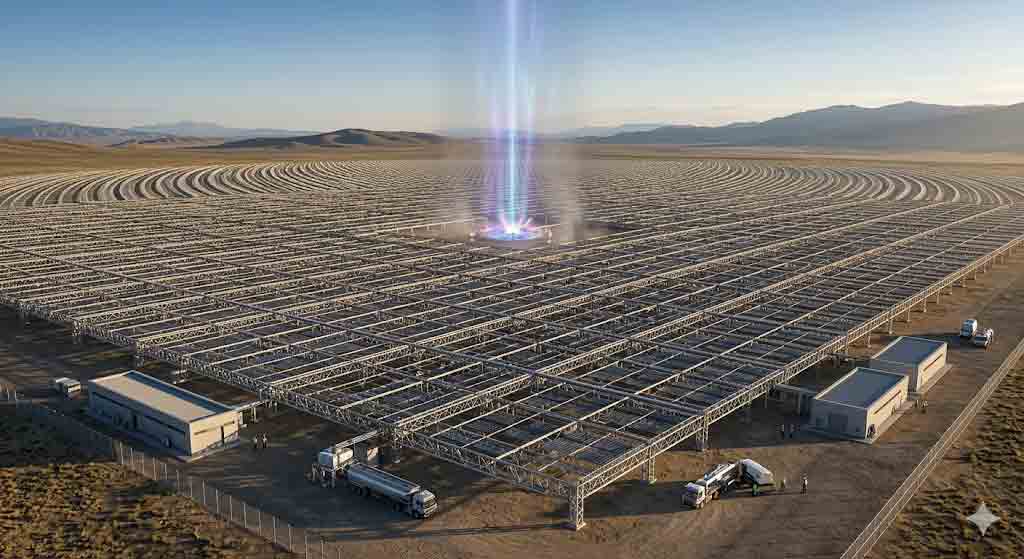
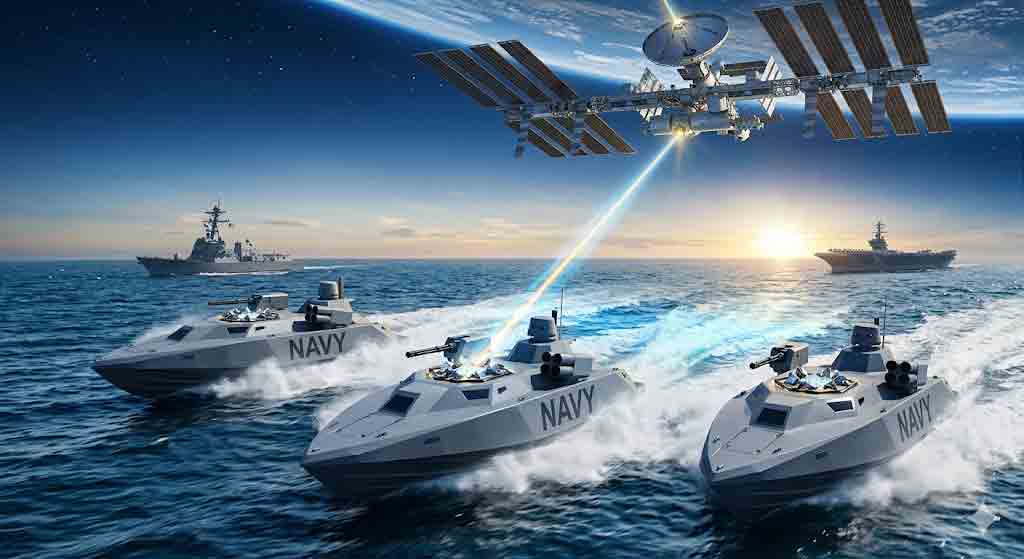
Space Based Power Stations
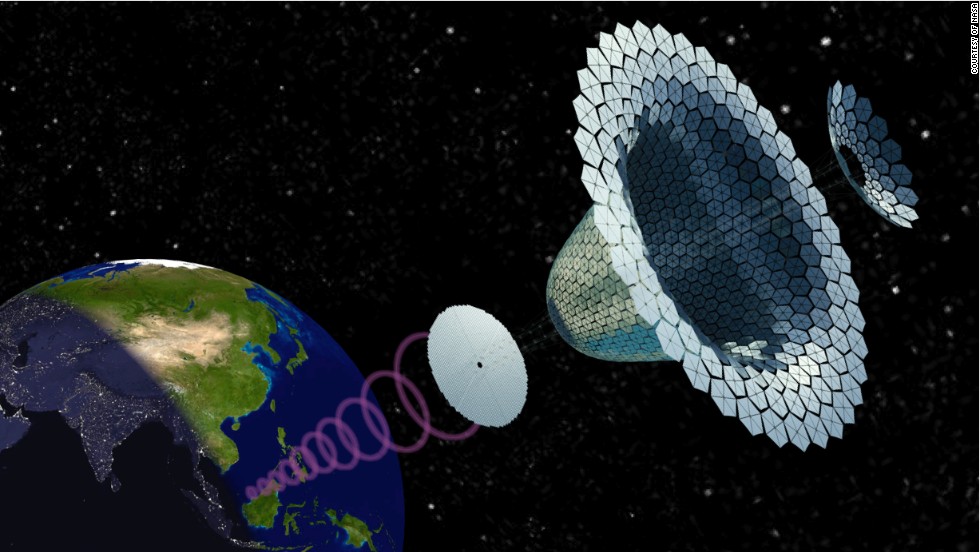
Space Based Solar Power
Space-based solar power is the concept of collecting solar power in space for use on earth by using a solar powered satellite. This method results in several benefits such as a higher collection rate and a longer collection period because of a lack of atmosphere and night time in space. At the center of this technology are silicon wafers, which are used to convert sunlight to energy.
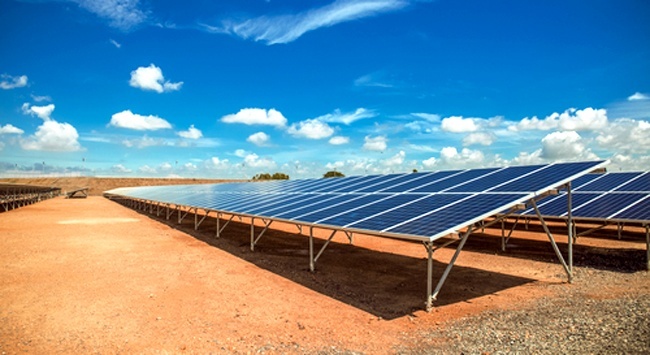
Earth-Based Solar Power
Earth-based solar power is the current form of solar power technology, which utilizes solar panels placed on the ground to generate energy. This method is not as efficient as the space based method due to environmental barriers such as the atmosphere, which absorbs and reflects sunlight. At the center of this technology are silicon wafers, which are used to convert sunlight to energy.
Premium Substrates for Space-Based Solar Power
The harsh environment of space requires materials that can withstand extreme conditions while maximizing energy conversion. Because space-based systems benefit from an uninterrupted solar constant of approximately 1361 W per square meter, the quality of the solar cell is paramount.
At UniversityWafer.com, we supply the aerospace and energy sectors with top-tier substrates designed for next-generation energy generation:
- High-Efficiency Silicon Wafers: Essential for converting pure sunlight into energy without the interference of Earth's atmosphere.
- Multi-Junction Cell Compatible: Our substrates support the advanced solar technologies used by organizations like NASA and the ESA, helping achieve typical satellite panel efficiencies of 28% – 35%.
- Durable & Reliable: Manufactured to endure the rigorous demands of orbital deployment and power electronics routing.
Whether you are building systems to power satellites or conceptualizing water electrolysis systems capable of producing 0.7 kg of hydrogen per hour, UniversityWafer.com has the foundational materials you need to get your project off the ground.
Technical Research of the Energy System
This section analyzes the technology required for a space-based satellite system that generates hydrogen and oxygen from water using solar energy.
Solar Energy Generation in Space
In space, the available solar energy is greater than on Earth because there is no atmosphere to absorb or scatter sunlight. The average solar energy reaching Earth’s orbit is approximately: 1361 W per square meter
This value is known as the solar constant. If high-efficiency solar panels are used: typical satellite solar panel efficiency: 28% – 35%
Example calculation:
1361 W × 0.30 ≈ 408 W
This means that each square meter of solar panel could produce about 400 W of electrical power in space.
| Panel Area | Energy Generated |
|---|---|
| 10 m² | ~4 kW |
| 100 m² | ~40 kW |
| 1000 m² | ~400 kW |
Satellites built by organizations such as NASA and the European Space Agency use multi-junction solar cells, which are among the most efficient solar technologies currently available.
Voltage Required to Split Water
To separate water into hydrogen and oxygen, the process called water electrolysis is used.
2H₂O → 2H₂ + O₂
The theoretical minimum voltage required is: 1.23 V
Typical operating voltage: 1.8 V – 2.2 V
- collect energy from solar panels
- regulate voltage
- supply power to the electrolyzer
Energy Required to Produce Hydrogen
To produce 1 kilogram of hydrogen: 50–55 kWh is required.
Example:
40 kW → 40 kWh per hour
40 ÷ 55 ≈ 0.73 kg
The system could produce approximately 0.7 kg of hydrogen per hour.
Total System Efficiency
| Stage | Efficiency |
|---|---|
| Solar panels | 30–35% |
| Power electronics | 90–95% |
| Electrolysis | 65–80% |
Overall system efficiency: 20–25%